



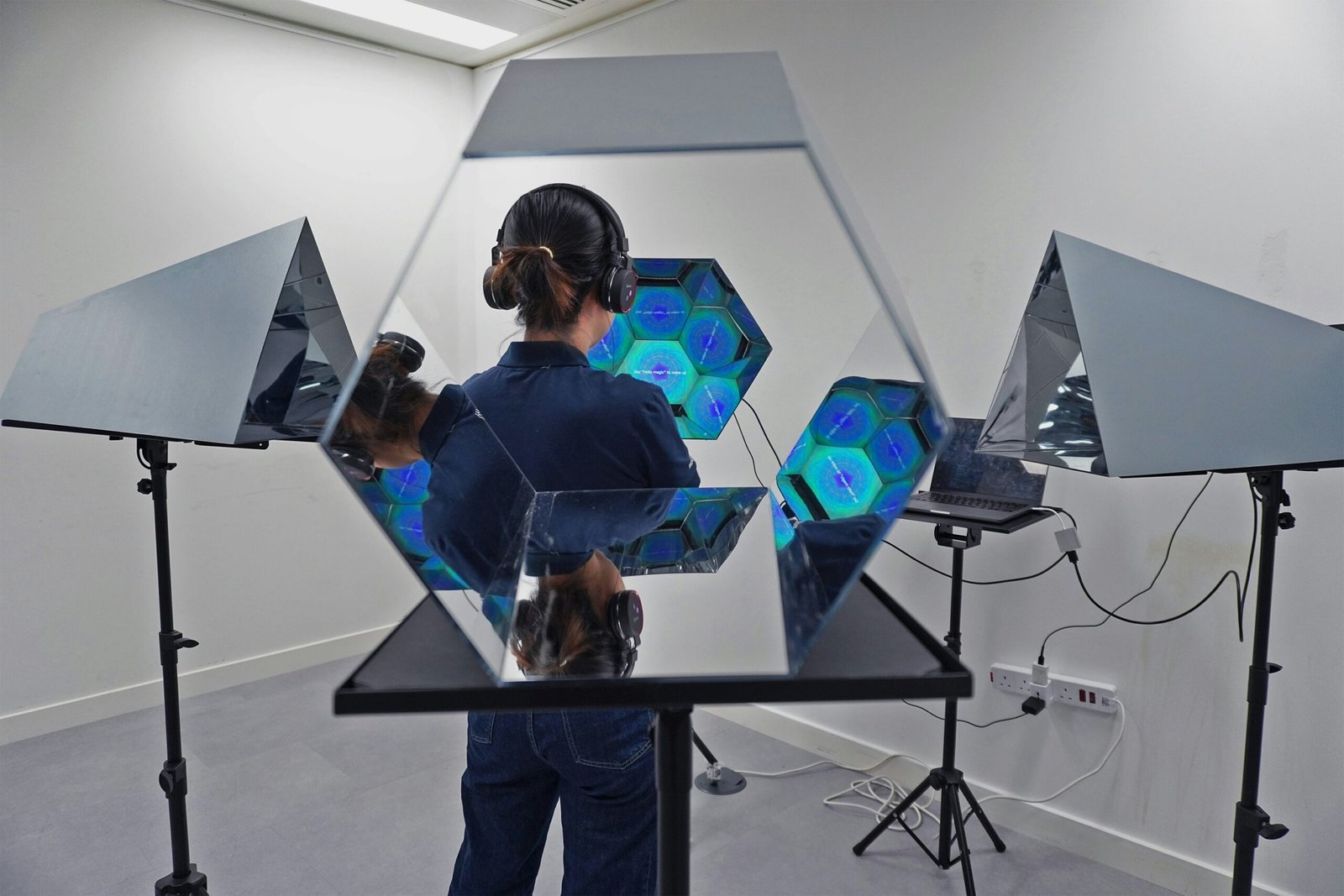
🌍 Introduction – What is Augmented Reality (AR)?
Augmented Reality (AR) is one of the most exciting technologies of our time. It is not just about playing games with AR filters or catching Pokémon in Pokémon Go. By 2025, Augmented Reality 2025 will be a major part of our daily lives, changing how we work, learn, shop, and communicate. Unlike Virtual Reality (VR), which immerses users into a fully digital world, AR blends the real world with digital objects.
For example, you can wear AR glasses and see a digital map on your street, try clothes virtually before buying them, or attend a class where your teacher appears as a hologram in front of you. Big companies like Google, Apple, Microsoft, and Meta are already investing billions in AR development.
📈 The Evolution of Augmented Reality (2010 – 2025)
The journey of AR technology started more than a decade ago. Let’s see how it evolved into what we now call Augmented Reality 2025:
- 2010 – 2015: AR appeared in mobile apps and games.
- 2016: Pokémon Go introduced AR gaming to millions worldwide.
- 2017 – 2020: Businesses started experimenting with AR in shopping and training.
- 2021 – 2023: Meta, Apple, and Microsoft announced AR glasses and headsets.
- 2024 – 2025: AR became mainstream in education, shopping, healthcare, and business.
🔬 How Augmented Reality Works – The Tech Behind AR
AR is powered by a mix of cutting-edge technologies:
- AR Glasses and Headsets – Apple Vision Pro, Microsoft HoloLens, Meta Quest.
- AR Mobile Apps – Snapchat filters, Instagram AR shopping, AR navigation in Google Maps.
- Artificial Intelligence (AI) – Smarter AR that recognizes environments.
- Cloud Computing – Large-scale AR data storage and processing.
- 5G & 6G Internet – Fast, lag-free AR experiences anywhere.
By 2025, these technologies combine to create immersive AR experiences in daily life.
🎮 Augmented Reality in Gaming – Still the Strongest Market
Gaming has always been the biggest driver of AR. With AR gaming in 2025, players no longer just sit in front of a screen. Instead, their homes, streets, and even classrooms can become digital playgrounds.
- Pokémon Go style AR games are evolving into hyper-realistic experiences.
- AR headsets allow multiplayer interaction in shared spaces.
- Esports companies are already preparing for AR-based tournaments.
This shows that gaming will remain the backbone of Augmented Reality 2025 but the technology is going much further.
🎓 Augmented Reality in Education – Virtual Classrooms & AR Learning Tools
Education is one of the most promising areas for AR in 2025. Imagine a student learning history and seeing 3D holograms of ancient civilizations in their classroom.
- Virtual Classrooms: Teachers and students meet in AR spaces.
- Science Experiments: AR labs let students perform experiments safely.
- Medical Training: Doctors can practice surgery using AR simulations.
- Language Learning: AR apps show real-time translations in your environment.
By 2025, AR will be part of schools, universities, and professional training across the globe.
🛒 Augmented Reality in Shopping – Try Before You Buy Revolution
One of the most powerful uses of Augmented Reality 2025 is in e-commerce and retail. Brands are already adopting AR to let customers try products before buying.
- Virtual Dressing Rooms: Try clothes, shoes, and accessories digitally.
- AR Furniture Shopping: Place a digital sofa in your living room before buying.
- Cosmetics Testing: Try lipstick, hair color, and makeup using AR filters.
- Interactive Stores: Physical shops enhanced with AR displays.
Companies like IKEA, Sephora, and Amazon are already leading the way. By 2025, this will be the standard of online shopping.
🏥 AR in Healthcare, Real Estate, and Daily Life
AR is also changing industries beyond gaming and shopping.
- Healthcare: Doctors use AR for surgeries, diagnosis, and training.
- Real Estate: Buyers tour AR versions of houses before visiting.
- Tourism: AR travel guides show historical facts and 3D monuments.
- Daily Life: AR navigation, AR-based social media, AR in fitness apps.
The opportunities for AR are endless, making it a game-changer in 2025.
💼 Business and Marketing in Augmented Reality 2025
For businesses, AR opens new opportunities:
- AR Ads: Interactive advertising campaigns with 3D experiences.
- Brand Engagement: Virtual try-ons and AR product demos.
- AR Meetings: Remote teams meet as holograms.
- Real-Time Training: Employees learn skills via AR simulations.
By 2025, AR marketing strategies will be as important as SEO or social media marketing.
⚠️ Challenges of AR – Cost, Privacy, and Adoption
Even though AR is powerful, there are challenges in 2025:
- High Costs: AR glasses and headsets are still expensive.
- Privacy Concerns: AR collects user location and real-world data.
- Adoption Rate: Not everyone is ready to shift to AR.
- Health Issues: Long-term use of AR glasses can affect eyesight.
However, as costs drop and technology improves, AR will become more accessible.
🚀 Future of Augmented Reality Beyond 2025
By 2030, AR will merge with AI, VR, and the Metaverse to create a fully digital society. Imagine:
- AR contact lenses replacing smartphones.
- AR cities with interactive traffic signs and smart infrastructure.
- AR jobs where workers collaborate globally in hologram offices.
The future of AR is limitless and 2025 is only the beginning.
📝 Conclusion – Why AR is the Next Big Thing
Augmented Reality 2025 is not just about gaming anymore. It is transforming education, shopping, healthcare, real estate, tourism, and marketing. As big tech companies push AR into mainstream, we are moving into a new era of digital and real-world integration.
For businesses, students, and daily users, AR is the future of technology. By 2025 and beyond, AR will become as normal as using the internet today.