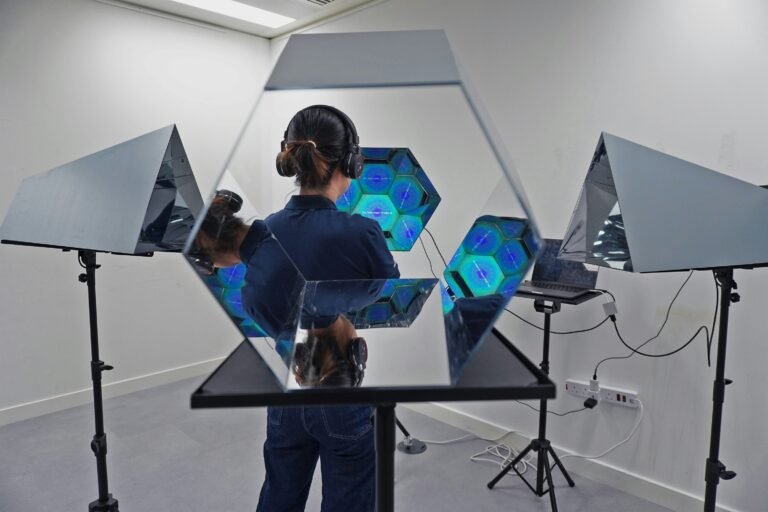




Introduction – Metaverse Technology 2025
In the last few years, the world has witnessed one of the biggest transformations in digital technology: the rise of the Metaverse. Metaverse technology in 2025 is not just a buzzword—it is the next generation of the internet. It is a space where the physical and digital worlds merge through Virtual Reality (VR), Augmented Reality (AR), Artificial Intelligence (AI), and Blockchain technology. Unlike traditional websites or mobile apps, the Metaverse offers fully immersive 3D environments where people can work, socialize, shop, play games, attend events, and even earn money.
Tech companies like Meta (Facebook), Google, Apple, Microsoft, Nvidia, and Samsung are investing billions of dollars to build the infrastructure of the Metaverse. By 2025, the Metaverse is expected to become a trillion-dollar economy, creating opportunities in gaming, e-commerce, education, healthcare, marketing, and even real estate.
The Metaverse Technology 2025 revolution is shaping how businesses operate, how consumers interact, and how humans experience digital content.
The Evolution of Metaverse Technology
The journey of the Metaverse did not start overnight. It evolved step by step:
- Early Virtual Worlds: Platforms like Second Life (2003) and Roblox introduced the idea of shared 3D virtual spaces.
- Rise of Gaming Metaverse: Games like Minecraft and Fortnite became popular by offering immersive worlds with digital avatars.
- Facebook Becomes Meta (2021): Mark Zuckerberg announced that Facebook would rebrand to Meta, signaling a full commitment to building the Metaverse.
- NFTs and Blockchain (2021-2023): Digital assets, NFTs (Non-Fungible Tokens), and cryptocurrencies became central to the Metaverse economy.
- Metaverse in 2025: With advanced VR headsets, AR glasses, AI-driven avatars, and 5G internet, the Metaverse is becoming a fully functional digital universe.
This evolution shows that Metaverse Technology 2025 is not just a futuristic dream—it is already here and growing at a rapid pace.
How Metaverse Works – The Core Technologies
To understand Metaverse Technology 2025, we need to explore the technologies powering it:
1. Virtual Reality (VR)
VR headsets like Meta Quest, Sony PlayStation VR, and Apple Vision Pro transport users into 3D worlds where they can interact with digital environments.
2. Augmented Reality (AR)
AR overlays digital content onto the physical world. For example, AR glasses let users see holograms, 3D products, or maps in real time.
3. Artificial Intelligence (AI)
AI creates smart avatars, chatbots, and recommendation systems inside the Metaverse. It personalizes experiences, automates tasks, and enables realistic digital interactions.
4. Blockchain Technology
The Metaverse economy depends on blockchain, NFTs, and cryptocurrencies. Blockchain ensures ownership of digital assets and secure transactions.
5. Cloud Computing and 5G
To run large-scale Metaverse platforms, powerful cloud servers and ultra-fast 5G connectivity are necessary. They make real-time interactions seamless.
Applications of Metaverse Technology in 2025
The Metaverse Technology 2025 revolution is creating new industries and opportunities:
- Gaming: Millions of players spend hours daily in virtual worlds like Roblox, Fortnite, and Horizon Worlds. In 2025, gaming is the biggest driver of Metaverse adoption.
- Education: Students attend virtual classrooms, learn science with 3D models, and practice surgeries in VR labs.
- Healthcare: VR therapy treats anxiety, phobias, and PTSD. Surgeons train in digital environments before real operations.
- Work and Collaboration: Remote workers use Metaverse offices to attend meetings, brainstorm ideas, and build projects together.
- E-commerce: Online shopping transforms into 3D virtual malls, where customers “walk” through stores and try products before buying.
- Real Estate: Investors buy and sell virtual land and properties inside Metaverse platforms like Decentraland and Sandbox.
Business and Marketing in the Metaverse
Digital marketing is changing forever with Metaverse Technology 2025. Businesses are creating:
- Virtual Stores where customers shop inside 3D environments.
- Metaverse Ads that appear on virtual billboards, concerts, and events.
- Brand Events where companies host concerts, shows, and product launches in virtual arenas.
For example, Nike launched Nikeland in Roblox, where users buy digital sneakers. Gucci, Coca-Cola, and Samsung are also using Metaverse spaces for branding.
AI Integration in Metaverse Technology
AI is one of the most powerful tools in the Metaverse 2025. Its applications include:
- AI-powered avatars that look and act like humans.
- ChatGPT-style assistants inside VR that help users navigate.
- Personalized marketing campaigns for businesses in the Metaverse.
- Automated translation tools for global communication.
By 2025, AI will make the Metaverse more realistic, intelligent, and interactive.
Challenges of Metaverse Technology
Despite its potential, Metaverse technology faces challenges:
- High Cost: VR headsets and AR devices are still expensive.
- Privacy Issues: Collecting personal data in immersive environments raises concerns.
- Digital Addiction: Spending too much time in the Metaverse may cause social isolation.
- Energy Usage: Blockchain and servers require massive amounts of energy.
These issues must be addressed before Metaverse Technology 2025 can fully succeed.
Future of Metaverse Technology in 2025 and Beyond
By 2025, the Metaverse will become a trillion-dollar economy. It will transform:
- The way we work and collaborate
- How we shop and consume products
- How businesses market their brands
- How people learn, play, and interact
The Metaverse Technology 2025 is not just about gaming or entertainment—it is the future of the internet. It represents the shift from 2D screens to immersive digital universes where everything is possible.